
Southern Counties Staffordshire Bull Terrier Society
Southern Counties Staffordshire Bull Terrier Society
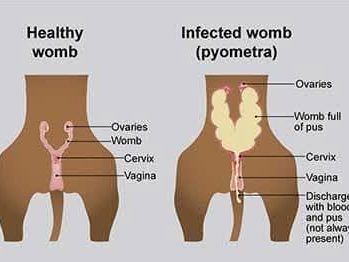
Pyometra is a serious, life-threatening bacterial infection of the uterus that commonly affects unspayed (intact) female dogs, usually a few weeks after estrus (heat).
Causes
* Hormonal changes after heat, especially increased progesterone.
* Thickening of the uterine lining (cystic endometrial hyperplasia).
* Bacterial infection, most commonly E. coli.
* Accumulation of pus within the uterus.
Types
Open Pyometra
* Cervix remains open.
* Pus or bloody discharge from the vulva.
* Easier to recognize.
Closed Pyometra
* Cervix is closed.
* No vaginal discharge.
* Pus accumulates inside the uterus, causing severe abdominal enlargement and a higher risk of uterine rupture and sepsis.
Clinical Signs
* Depression and lethargy
* Loss of appetite
* Fever (may be absent in some cases)
* Increased thirst and urination (PU/PD)
* Vomiting
* Weight loss
* Abdominal distension
* Vaginal discharge (open pyometra)
* Dehydration
Diagnosis
* History of recent heat cycle
* Physical examination
* Complete blood count (often shows neutrophilia)
* Ultrasonography: enlarged, fluid-filled uterus
* Radiography in advanced cases
Treatment
Ovariohysterectomy (spay surgery) is the treatment of choice and is usually life-saving.
Supportive therapy:
* Intravenous fluids
* Broad-spectrum antibiotics
* Pain management
Medical treatment with prostaglandins may be considered only in selected breeding animals and carries risks.
Prevention
Elective spaying
Pyometra is a veterinary emergency. Without prompt treatment, it can lead to septicemia, shock, uterine rupture, and death.
We need your consent to load the translations
We use a third-party service to translate the website content that may collect data about your activity. Please review the details in the privacy policy and accept the service to view the translations.